

29.11.2026 11:00
Death cap resembles a button mushroom. Poisoning symptoms may appear even after 24 hours
The death cap (Amanita phalloides) contains amatoxins which, if ingested, can cause liver failure and death, warns the Dutch National Poisons Information Centre (Nationaal Vergiftigingen Informatie Centrum, NVIC). Symptoms of amatoxin poisoning may not appear until 6 to 24 hours after eating the mushroom.
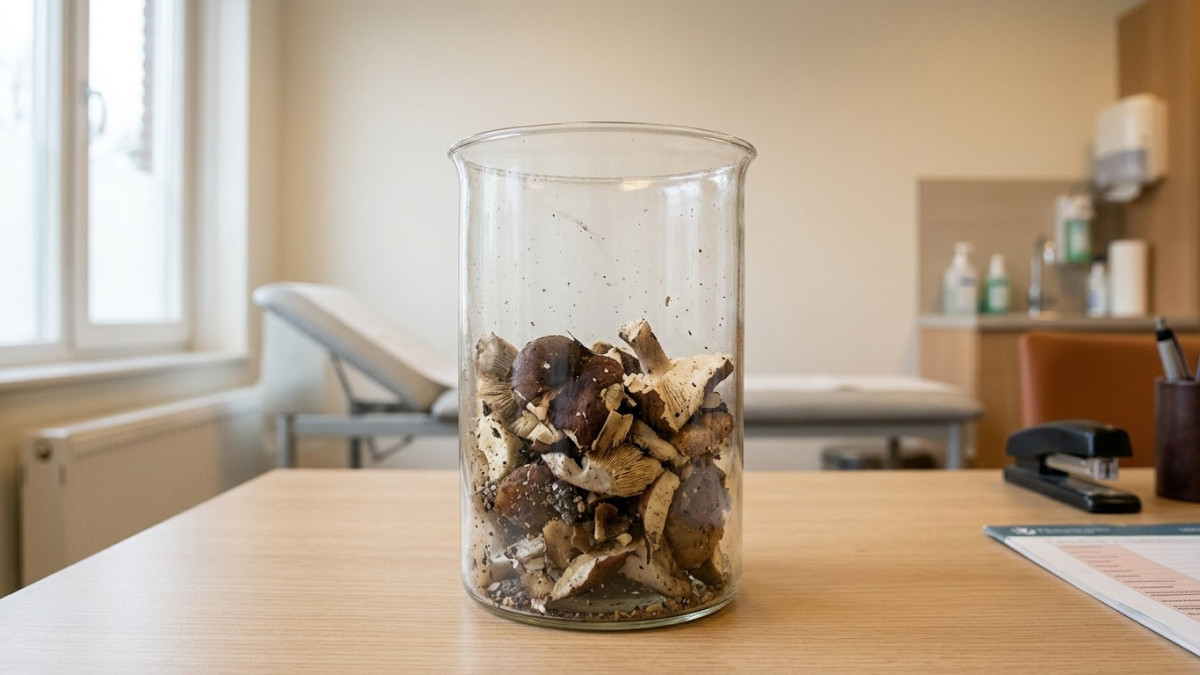
Mushroom remnants can help a specialist determine the species responsible for the poisoning. Zdjęcie wygenerowane przez sztuczną inteligencję
Identifying mushrooms requires specialist knowledge
“It looks very much like an ordinary button mushroom,” forester Helmut van Pelt says of the death cap in an interview with regional broadcaster Omroep Brabant during a walk through the forests of Breda. According to the NVIC, identifying mushroom species requires specialist knowledge.
The centre recommends preparing meals only from mushrooms cultivated specifically for consumption.
Improvement may only be apparent
Amatoxin poisoning begins with abdominal pain, severe vomiting and watery diarrhoea. The symptoms may then subside or disappear for a while, and the patient may appear to be recovering.
During this time, amatoxins continue to destroy liver cells, which may lead to acute liver failure. According to the NVIC, the earlier treatment begins, the better the prognosis.
When to call 112
The Dutch Red Cross (Rode Kruis Nederland) advises calling 112 if a person who has eaten poisonous mushrooms:
If possible, keep any remnants of the mushrooms that were eaten: raw, fried, or those that ended up in the rubbish. Also take a photograph of the mushroom that was picked.
- is unconscious,
- is drowsy or has reduced consciousness,
- has breathing difficulties or is agitated and frightened.
If possible, keep any remnants of the mushrooms that were eaten: raw, fried, or those that ended up in the rubbish. Also take a photograph of the mushroom that was picked.
The poison centre assists doctors, not families
The NVIC advises private individuals with questions about poisoning to contact their treating physician. The centre’s telephone and online consultations regarding acute poisonings are intended for medical professionals providing care, not for families.
The centre can assist the doctor in another way: it can put them in touch with a mycologist, a mushroom expert who will try to identify the species based on any preserved remnants.
Text prepared using AI based on the sources listed in the article.
Sources: National Poisons Information Centre (UMC Utrecht), NOS Nieuws, Omroep Brabant, Dutch Red Cross, National Poisons Information Centre (NVIC), UMC Utrecht, Het Acute Boekje.
