

28.11.2026 16:30
Plastic packaging in residual waste. In parts of the Netherlands, it is sorted at the facility
Nearly 60% of Dutch municipalities used partial or full post-separation of residual waste (nascheiding) in 2025, according to Statistics Netherlands (CBS). In 2023, one quarter of municipalities did so. Where a municipality uses post-separation, plastic and metal packaging and beverage cartons (PMD) can be disposed of together with residual waste (restafval).
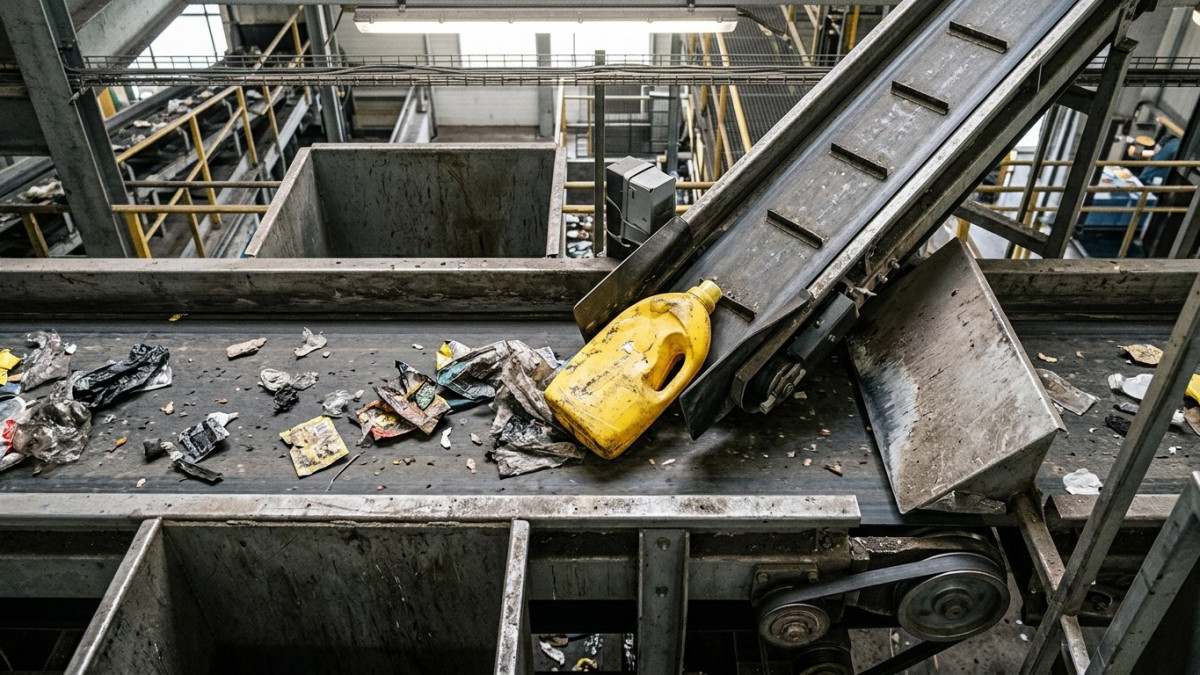
Plastic packaging may be subject to additional sorting only in some neighbourhoods, not necessarily throughout the entire municipality. Zdjęcie wygenerowane przez sztuczną inteligencję
Rules may differ between neighbourhoods
According to Rijksoverheid, the government information service, each municipality (gemeente) decides for itself how household waste is collected. After moving to another municipality, the rules may therefore differ from those at your previous address.
Even within a single municipality, the same rules do not apply everywhere. CBS notes that a municipality using nascheiding does not have to do so throughout its entire area. Sometimes waste is post-sorted only in a few neighbourhoods, for example where there are many high-rise apartment blocks.
Paper and glass are still collected separately
Post-separation means that a waste-processing facility extracts materials from restafval that can be reused, as described by the Binnenlands Bestuur portal. It usually involves mechanically separating PMD from household residual waste.
According to Milieu Centraal, the Dutch environmental and energy-saving information organisation, this system replaces household sorting only for PMD. Paper, glass, vegetable, fruit and garden waste (GFT), textiles and small chemical waste cannot be separated from the remaining waste later. These types of waste must still be separated at home, including in areas where PMD may go into restafval.
The charge may depend on the amount of waste
COELO is a research centre at the University of Groningen that analyses local charges and taxes. According to its calculations, the average waste charge (afvalstoffenheffing) for a single-person household is EUR 303 per year in 2026. This is 4.0% more than the year before.
Some municipalities use a variable charging system (diftar). Depending on the municipality, you then pay for each emptying of a bin, kilogram, bag or disposal of residual waste in a container. In some such municipalities, GFT waste is also charged for.
If you have questions about how your charge was calculated or about the assessment notice you received, contact your municipality.
Waste guide and collection calendar
You can check where to dispose of a specific item in the Milieu Centraal waste separation guide. Enter the product name, not the brand: for example, “kattenvoer” (cat food), rather than “Felix”.
In Groningen, you can find the collection calendar for your address on the municipality’s website.
In Amstelveen, you can check the calendar for your address through MijnAfvalWijzer.nl or in the AfvalWijzer app, after entering your postcode and house number. The website and app also show which bin should be used for individual types of waste.
Text prepared using AI based on the sources cited in the article.
Sources: Centraal Bureau voor de Statistiek (CBS), NOS, Rijksoverheid, Milieu Centraal, COELO, Gemeente Groningen, Binnenlands Bestuur, NVRD (Association of waste companies and municipal waste organisations), Hart van Nederland, Omroep Gelderland, Gemeente Amstelveen.
In Groningen, you can find the collection calendar for your address on the municipality’s website.
- Click “Afvalkalender voor uw adres”.
- Enter your postcode and house number.
- Click “volgende”.
In Amstelveen, you can check the calendar for your address through MijnAfvalWijzer.nl or in the AfvalWijzer app, after entering your postcode and house number. The website and app also show which bin should be used for individual types of waste.
Text prepared using AI based on the sources cited in the article.
Sources: Centraal Bureau voor de Statistiek (CBS), NOS, Rijksoverheid, Milieu Centraal, COELO, Gemeente Groningen, Binnenlands Bestuur, NVRD (Association of waste companies and municipal waste organisations), Hart van Nederland, Omroep Gelderland, Gemeente Amstelveen.
